

The Fastest Way To Blow Up A Good Trading Strategy
Two traders take exactly the same trade.
Same entry. Same stop. Same target.
One survives. One blows up their account.
Most traders assume the answer will be overtrading, revenge trading, no stop loss, or a bad strategy. Those things matter, but they are not always the real culprit.
Many traders do not blow up because their strategy is bad. They blow up because their position size does not match their strategy.
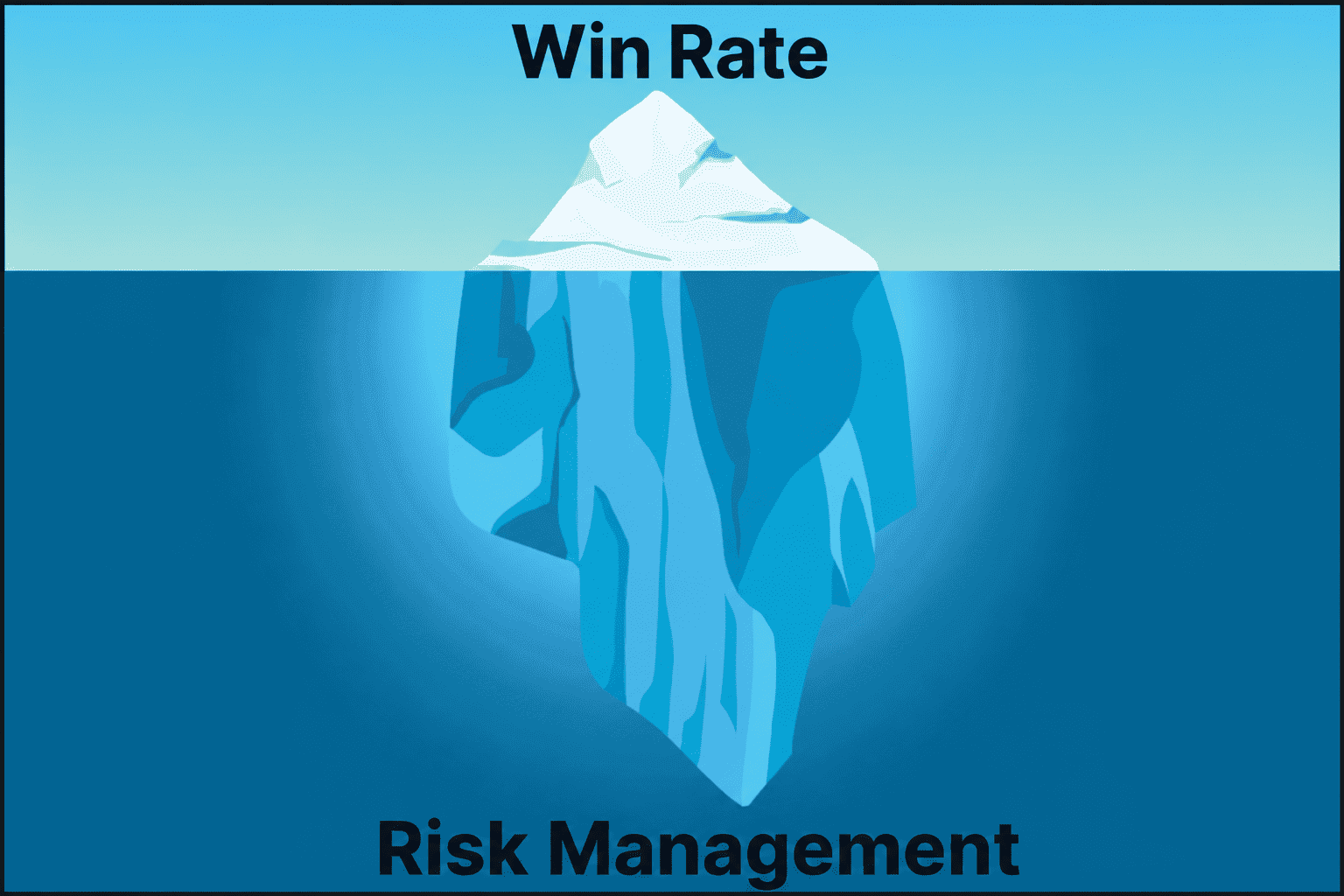
If you read our first Risk Management article, Why Your Win Rate Can Lie, you already know that a high win rate does not guarantee profitability. This article takes the next step: even a good strategy can fail if the risk is wrong.
Same Setup. Same Stop. Different Account Outcome.
Picture two traders watching the same chart at the same time.
Trader A and Trader B both take the same breakout setup. Same entry. Same stop. Same target. The only difference is how much they risk.
Trader A risks 0.5% of their account per trade.
Trader B risks 5%.
Both lose five trades in a row, a normal losing streak for many strategies.
Trader A is down roughly 2.5%. Uncomfortable, but still fully in the game. The strategy has room to play out. Trader B is down roughly 25%. The account is crippled. Confidence is gone. The next decision is emotional, not strategic.
The setup was identical. The stop was identical. The losing streak was identical. The strategy was not the difference. The position size was.
This is why position sizing belongs in the same conversation as win rate and risk-reward. You can be right about the market and still lose your account if you are wrong about size.
Key takeaway: A strategy does not fail in isolation. It fails or survives inside the risk you attach to each trade.
It Is Usually Not the Strategy You Are Blaming
When a funded account fails or a live account draws down hard, the first instinct is to abandon the setup.
Traders rewrite entry rules, swap timeframes, or hunt for a new indicator. Sometimes the strategy genuinely was weak. Often, though, the problem was execution risk, especially position size.
A strategy with positive expectancy on paper can still destroy an account live if each loss carries too much weight. Five consecutive losses at 0.5% risk is a manageable drawdown. Five consecutive losses at 5% risk is a career-ending week.
That is a different problem from overtrading or revenge trading. You can follow your plan perfectly, with the correct entry, correct stop, and correct target, and still blow up if the plan never defined how much capital each trade was allowed to lose.
In our earlier article on why win rate can lie, we showed how two traders with wildly different win rates can get opposite P&L results. Position size is the other half of that story. Win rate tells you how often you are right. Size tells you whether being wrong is survivable.
Key takeaway: Before you discard a setup, ask whether the strategy failed, or whether the risk per trade was never sized for the strategy's normal losing streaks.
Why Traders Increase Size Too Quickly
Most traders do not start by risking 5% per trade. Size usually creeps up.
Common triggers:
– Win streaks. Three green days feel like proof, so the next trade gets sized like the streak will continue.
– Passing a funded challenge. The account is "not real money" until it is, and the first live-sized loss hits differently.
– A good month. Confidence rises faster than sample size. The strategy has not changed, but the dollars at risk have.
– Impatience. Smaller risk feels too slow, so size becomes the shortcut to bigger returns.
None of these moments change the mathematics of a losing streak. They only change how much each loss hurts.
Experienced traders treat size as part of the system, not a reward for recent results. A trading plan should define not just entries and exits, but the maximum risk allowed per trade and when, if ever, that number is allowed to change.
Key takeaway: Size rarely jumps overnight. It drifts upward after wins, milestones, and impatience, exactly when traders feel least vulnerable.
Why Position Size Is Never a Fixed Number
Position sizing is not one universal lot size. It is the answer to one question: How much can I lose if this stop is hit?
That answer changes when any of these change:
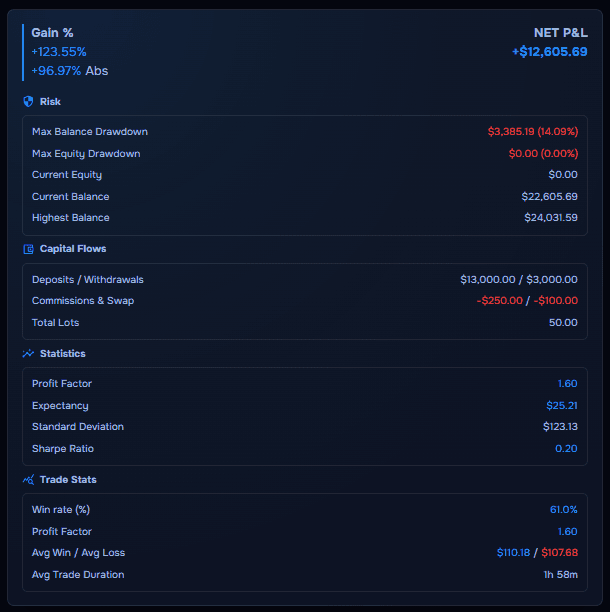
– Account size: the same dollar risk is a different percentage after wins or losses
– Market and instrument: pip value, margin, and volatility differ across pairs, indices, and crypto
– Volatility: wider swings often mean wider stops, which means smaller size for the same dollar risk
– Stop distance: a tighter stop allows larger size; a wider stop requires smaller size to keep risk constant
Two trades on the same setup can require different position sizes if the stop distance changes. That is not inconsistency. That is risk staying constant while the market changes.
Professionals do not think in terms of "how much can I make on this trade?" first. They think: how much can I lose? Profit is the upside of a plan that survives the downside.
Key takeaway: Position size is not a personality trait or a lucky number. It is a calculation that should move with account size, stop distance, and market conditions.
Plan the Risk Before You Click Buy or Sell
You do not need a full position sizing tutorial to fix most blow-ups. You need a habit: define the risk before the entry.
Three calculators cover most pre-trade decisions:
– Position Size Calculator: turn account risk and stop distance into a concrete lot or share size
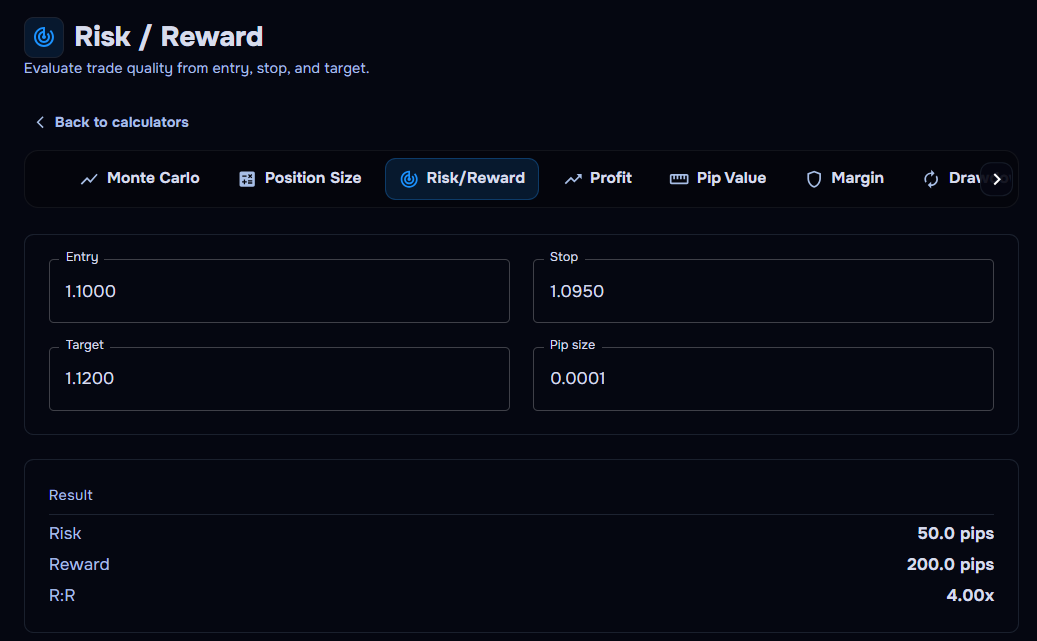
– Risk/Reward Calculator: check whether the target justifies the stop before you commit capital
– Drawdown Calculator: stress-test how a losing streak affects the account at your chosen risk level
Used together, they force the pause where most sizing mistakes happen: the moment between "good setup" and "how much am I actually risking?"
After the trade closes, compare the plan to the result. Did you risk what you intended? Did drawdown stay inside what you modelled? Did tags in your journal show size creep after wins? That loop (plan, execute, review) is how good strategies stay good under live pressure.
If you are still building the review side of that loop, start with tracking trading mistakes before they cost you big.
Key takeaway: Calculators turn position size from a feeling into a number. Numbers are easier to defend when five losses in a row test your confidence.
Conclusion
The fastest way to blow up a good trading strategy is not always a bad entry or a broken setup. Often, it is risking too much on a setup that was never tested at that size.
Two traders can take the same trade and get opposite outcomes. The difference is not magic. It is position size.
Define your risk before entry. Keep size consistent with your plan. Review whether losses came from the market or from oversizing. That is how a strategy survives long enough to prove whether it actually works.
TraderWaves gives you free calculators, analytics, and a trade journal in one workflow, so you can plan the risk, execute the setup, and review whether size matched the strategy.
What is position sizing in trading?
Can a good strategy still fail because of position size?
How much should I risk per trade?
What is the difference between position size and risk/reward?
Why do traders increase position size after winning?
How do trading calculators help with position sizing?
Ready to journal?
Start Tracking Your Trades Today
Sign up now and access advanced trade journaling tools for free.
Start Free: No Credit Card